


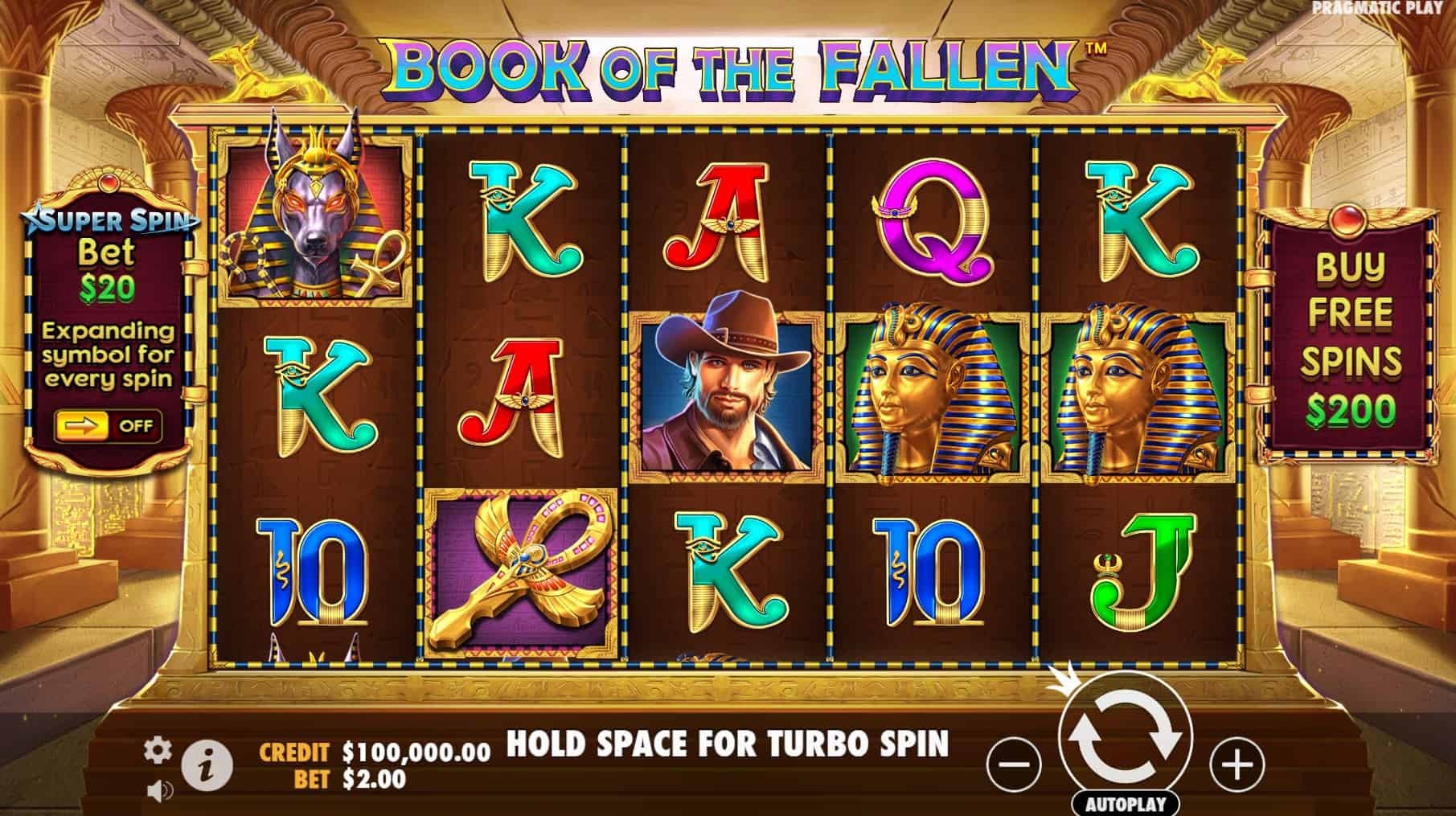
Book Of The Fallen Game In Switzerland
How to play Book of the Fallen safely in Switzerland 2026: plan your bets, set breaks, finish payouts cleanly (18+).
Secure Start and Expectation Check 2026
Imagine you only have a short window of time in the evening and want to “quickly play a few rounds” without it turning into an hour. This is precisely when starting with a plan helps: first set the framework, then play - not the other way around. In Switzerland, Book of the Fallen may be available on platforms that operate within applicable rules and age limits. For you, this practically means: 18+ only, play consciously, and treat the session as entertainment, not a project.
The first step is surprisingly simple: Before you start, decide on three things - time, budget, stop sign. Time can be a timer, budget an amount you genuinely accept as leisure cost. The stop sign is the moment you don't negotiate: the timer rings, the limit is reached, or you notice restlessness. Without these three points, the same often happens: You start casually, become impatient, increase speed or stake, and only realize late that you're already “hooked”.
Also pay attention to your starting condition. If you are tired, stressed, or just looking for distraction, decisions tip faster. Imagine you want to “force something” after a tough phase. This is not a sign that something has to happen immediately - it's your signal for a break. In 2026, with mobile sessions and very fast processes, this self-observation is more important than any number.
All promotional incentive structure is clearly stated in writing and/or via electronic means in an easily understood manner. All codes are accompanied by an explanation of what the code is for, who is eligible to use the code, and how it should be used. As such, players are less likely to be confused about what is required of them in order to receive a reward and how the reward will be applied after receiving it. The promotional incentives provided to participants provide them with time to become familiar with the gaming system's mechanics, their interface, and progress, before deciding how deeply they wish to become involved with this platform. Therefore, players are encouraged to participate in an informed manner, rather than being pressured or tempted to act quickly.
Gaming Experience, Tempo, and Daily Routine
Imagine you're playing on your phone, messages are coming in on the side, and the spins feel like they're running “on their own”. In such an environment, the session often gets faster and longer without feeling like a conscious decision. That's why tempo is your most important lever: Those who play slower make clearer decisions - those who speed up are more likely to slip into autopilot.
A good routine begins with a brief orientation phase: open the info view, understand the bet control, find the history, and only then start. After that, you play in blocks. A block can be a fixed number of rounds or a short period of time. After the block, you stop, look at the timer and budget, and ask yourself: “Do I really want to continue, or am I just going along?” This question seems insignificant, but it separates entertainment from habit.
Your own reaction to fluctuations is also part of the routine. Some become impulsive after a winning streak, others after a quiet phase. Imagine you realize after ten minutes that you're clicking faster than you're thinking. Then “more action” isn't the solution, but a short break. Get water, stand up, two minutes distance. If you want to continue playing afterward, okay - but within the same framework, not with new exceptions.
Betting and Control in Practice
Derive Bet Size From Time Instead of Hope
Imagine you want to play for 20 minutes, but you set a bet that eats up your budget in five minutes. Then every round becomes “important,” and important means pressure. Pressure almost always leads to poorer decisions: clicking faster, starting autoplay, increasing stakes, or reloading. The calmer way is to see betting as buying time. You choose your stake so that you have enough rounds to withstand fluctuations without becoming nervous.
A good test is your gaze. If you stare at your account balance after almost every spin, your bet is too high - not morally, but practically. Lower it until you can play a block without internally negotiating. Imagine there's a phase without significant hits. If you can endure it without immediately thinking about “going higher,” the framework is more suitable.
And make a rule that saves you when emotions run high: only change bets after a break. Not in the middle of a dry spell, not immediately after a highlight. This separates feeling and action - exactly what makes sessions plannable.
Incorporate Block Logic and Mini-Breaks
Imagine you say “just a moment” and later look at the clock: an hour. This doesn't happen because you're “too weak,” but because there's no clear stop. That's why blocks work so well. You define: one block, then a break, then a new decision. The break doesn't have to be long - a glance at the timer and budget is enough.
During the break, ask yourself three things: Am I calm? Am I still following my plan? Do I want to continue playing or just not stop? The last question in particular is uncomfortably honest - and therefore valuable. Many realize at this moment that they are actually done. If so, that's a good end, not an interruption.
If you continue, stay within the same framework. No spontaneous “just today” exceptions, otherwise the block logic is immediately worthless. Imagine you allow yourself a new endless block after every break. Then the stop is missing again - and you're back on autopilot.
Use Autoplay with a Short Leash
Imagine you start a long autoplay series and scroll through other things. Suddenly, many more rounds have passed than you realized. Autoplay isn't inherently bad, but it removes the brake. If you use it, use it as a tool: short series, a stop in between, a mini-check.
A simple process: Autoplay for a small number of rounds, then stop. After that, look at the timer and budget and decide again. If you notice that you're starting Autoplay out of impatience, that's a stop signal. Impatience + speed is the combination that makes sessions expensive.
In 2026, this is especially relevant because mobile devices make everything smooth and fast. The more convenient it is, the more important your own structure becomes. A short leash is exactly that structure.
Clear Stop Signs for Exiting
Imagine you catch yourself thinking "just a little more, then something is sure to happen." Or you click faster because you're annoyed. These aren't motivational phrases, they're stop signs. Take them seriously before you start "fixing" things.
Take a real break: get up, get water, some fresh air, check the timer. If you want to continue playing afterward, okay - but without increasing your stake and without reloading. If you feel relief after the break, quitting is the best decision.
An exit routine also helps: log out, put your phone away, do something else for five minutes. This small distance prevents "just one more round" from becoming a second session.
Payments, Withdrawals And Session Organization
Depositing With Control Instead of Reflex
Imagine deposits take seconds, and reloading is just as fast. Then it becomes more likely that you'll "just quickly" add more funds in the heat of the moment. If you're prone to impulse, this is where you consciously need friction. Set deposit limits before you start, not in the middle of a session.
A simple, strong rule is: one deposit per session. This means you don't have to constantly decide whether to add more. If the budget is gone, the session is over. If you want to play later, that's a new evening or at least a longer break with a new plan.
Also, stick to one method instead of constantly switching. Switching creates confusion during the process, and confusion creates stress. Stress, in turn, is fertile ground for bad decisions.
Withdrawal as a Concluding Ritual
Imagine you want to withdraw, are waiting for a status change, and continue playing "in the meantime." This is exactly how many people give back their winnings - not because they want to, but because they stay in the mode. Make withdrawal a clear end: stop the session, initiate the withdrawal, log out, switch activities.
Do not send multiple withdrawal requests in parallel. This rarely makes it faster, but it creates restlessness. If something is stuck, note the time and status message, and clarify it calmly. The most important rule remains: If you want to withdraw, you don't keep playing. Period.
And if waiting makes you nervous, that's a sign to create distance, not to keep spinning. A short walk or looking at another screen helps more than "just a few more rounds."
Table: Quick Check For A Clean Session
Imagine you want to check in 30 seconds if your session is well-prepared. Use this list as a pre-check before you start or continue.
Area | What You Briefly Check | Typical Pitfall | Calm Counter-Step |
Budget | Fixed amount for the session | “Just a little more” | One deposit per session |
Time | Timer or block length | Playing through without stops | Play a block, then pause |
Stake | Stable stake per block | Increasing due to impatience | Change only after a break |
Exit | Clear moment to end | Continue playing while waiting | Log out after completion |
Support | Note time and status | Clicking around hectically | Brief, concrete, one-time |

Everyday Play: Emotions, Habits, Decisions
Managing Quiet Phases
Imagine nothing exciting happens for a while, and you feel restless. Many react by increasing speed or stakes – and that's precisely what makes the session more expensive. The better step is to accept silence as a normal part of the game and not change your framework just because the phase feels tough.
One technique helps: finish a block, then pause. During the break, you check not only your budget and time but also your motivation. Do you want to continue playing because you feel like it – or because you don't want to accept that it's currently quiet? If it's the latter, ending the session is often the smarter decision.
Also be clear: Every round is a new event. A long quiet phase does not mean that 'something is due now.' If you let go of this thought, the pressure decreases – and you are more likely to stick to your plan.
Winning Moments Without Adrenaline Extension
Imagine you hit a strong highlight, and your finger immediately wants to continue. This is normal but risky because adrenaline makes you break rules faster. That's why you need a break precisely after a good moment, not in the middle of a dry spell.
A practical process: After a highlight, you briefly stop, check the timer and budget, and make a decision. Either you end the session because you want to leave with a good feeling, or you continue playing – but with the same stakes or even a bit calmer. What you want to avoid: immediately going higher because it 'feels earned'.
If you notice yourself thinking 'it's going well now, I have to take advantage of it,' that's an indication of autopilot. Autopilot isn't evil – it's just expensive. A break brings you back.
Mobile Habits in 2026
Imagine you're playing on your phone and constantly switching between apps. Time blurs, and decisions are made faster. If you notice yourself scrolling or chatting on the side, that's a sign to stop briefly and check your timer and budget.
Make it easier for yourself to make good decisions: quieter notifications, short sessions, fixed breaks. And log out after each session. This small friction prevents you from getting back in without a conscious choice. Especially in 2026, logging out is an underestimated tool against 'by accident' plays.
Device security is also part of it: active lock, do not share your device, and no sessions in public stress. If you are on the go and feel distracted, rather postpone the session. That saves you more later than it costs.
Time-Out and Self-Protection
Imagine you notice a pattern: You start out of boredom, play longer than planned, or you often think about reloading. Then this is not a character issue but a system issue. Time-outs are there to break the reflex before it becomes ingrained.
Use short breaks as soon as you feel restlessness or a 'hunting' sensation. If patterns recur, a longer break can be useful. This is not failure but protection. Playing should remain voluntary, and it is only for 18+.
A practical phrase for everyday life: If after a break you cannot clearly say that you want to continue playing within your limits, you end the session. This rule is simple and works surprisingly well.
Summary and Next Step
Imagine you want to say after the session: 'It was okay, I have it under control.' You achieve this not through perfect predictions, but through a clean process: plan stakes from time, play in blocks, set breaks, ritualize the exit. If you do this, fluctuations become less threatening because you don't have to respond to every phase with action.
In Switzerland, the framework applies everywhere: 18+ and responsible, within applicable rules. In 2026, mobile convenience is the big amplifier - which is why many need more structure than before. Timer, deposit limit, one deposit per session, logging out after completion. This sounds simple, but it protects your budget more strongly than any 'I'll pull myself together'.
Mini-Plan for Your Next Session
Imagine you start today as an experiment, not a mission. Set a timer, set a budget, choose a calm stake, play one block, take a break, decide again. If you continue, stay within the same framework. If you stop, log out and briefly change activity – so that the evening truly ends and doesn't just continue.
FAQ
How do I start a session without slipping into autopilot?
Set a timer and play in blocks with a short break in between. Start with a few manual rounds so you can really see what's happening. If you notice yourself scrolling on the side, stop briefly and check your time and budget.
What is a good stop sign when I get restless?
If you click faster, get annoyed, or have the urge to 'fix' stakes and tempo, that's a clear signal. Take a break, stand up briefly, and then decide again. If the pressure remains, it's usually better to stop for today.
How do I prevent reloading in the same session?
Make it a firm rule: one deposit per session. Once the budget is reached, you end the session. If you want to play later, do it on another day or after a longer break with a new plan.
Why should I stop briefly after a highlight?
Because adrenaline distorts decisions and makes you break rules more easily. A short break after a strong moment helps to check the timer and budget and choose consciously. This prevents a good moment from dragging you into an overly long session.
What helps if a payout makes you nervous?
End the session, initiate the payout, and log out instead of continuing to play 'in the meantime.' If you have to wait, change activities for a few minutes. Nervousness is a good sign to create distance, not to spin more.
When is a time-out useful?
As soon as you start out of habit, ignore your own limits, or think about reloading more often. A time-out interrupts the reflex and creates distance. If patterns recur, a longer break is a sensible self-protection (18+).
How do I write to support to make it faster?
Briefly write down: what you did, what you expected, and what you see, plus time and status message. Do not send contradictory follow-ups. And if anger arises, pause first – anger rarely leads to good decisions.